Notes from the Field

Notes from the Field
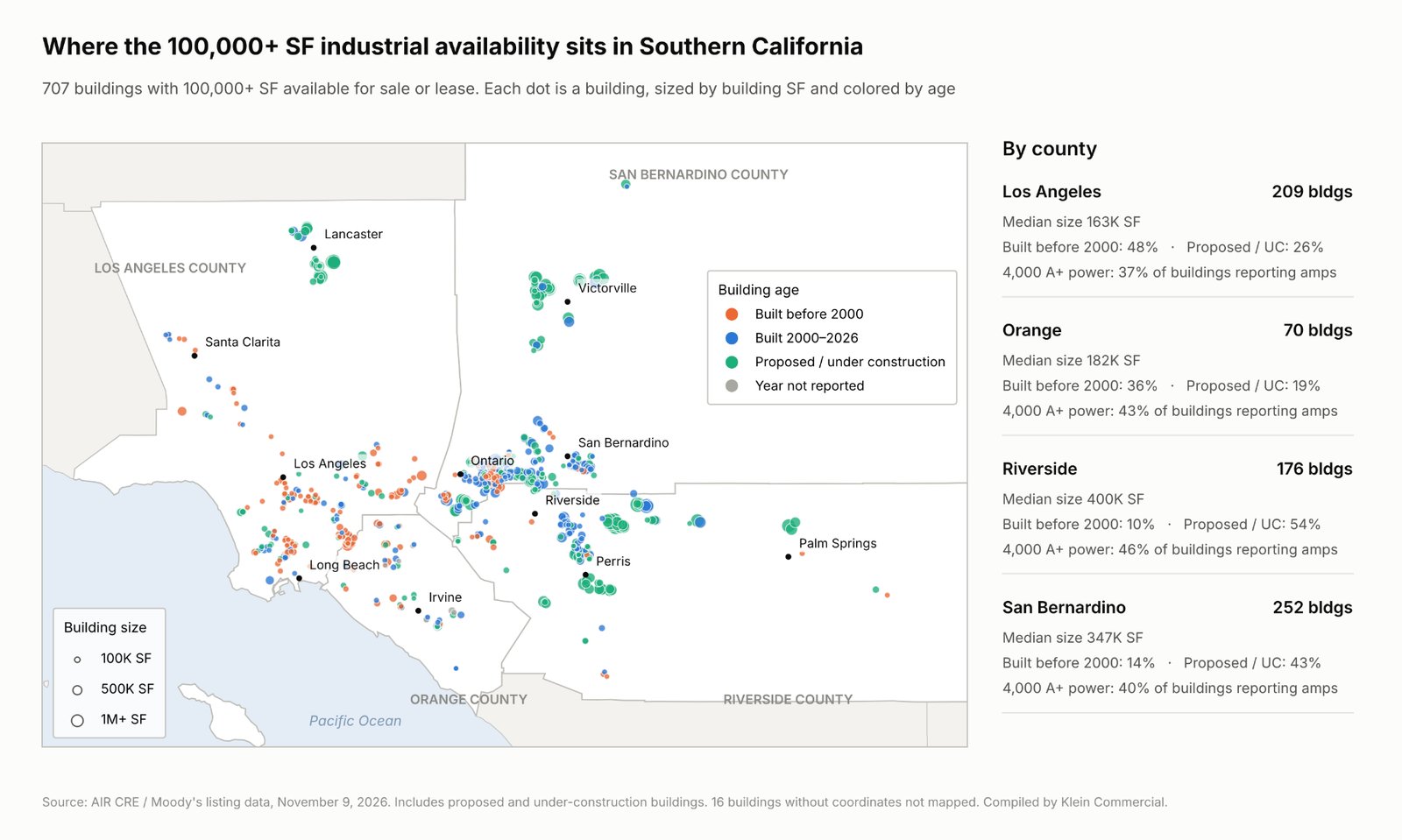
Map of 707 Southern California industrial buildings with 100,000+ SF available for sale or lease, colored by building age, with county breakdown for Los Angeles, Orange, Riverside and San Bernardino
707 buildings with 100,000+ SF available for sale or lease across Los Angeles, Orange, Riverside and San Bernardino counties. Source: AIR CRE / Moody’s listing data, November 9, 2026. Compiled by Klein Commercial.

Southern California availability is at a high point

Available industrial space in Southern California is at a high point, and the pressure is coming from several directions at once. Tariffs, particularly on Chinese goods, have reduced imports and reshaped the warehouse, distribution and transportation network. Southern California is the nation’s primary gateway to China, so it is the region most exposed to trade.

High fuel and diesel prices have squeezed profits for many warehouse and distribution businesses, and the slowdown is crimping both day-to-day operations and expansion plans. Immigration enforcement and stricter federal rules for commercial drivers have thinned the driver pool, which has reduced the number of tenants for truck yards — until recently the strongest segment of Industrial Outdoor Storage (IOS). Higher interest rates and lower rents have broken many pro forma projections, and the investment and refinance markets have stalled.
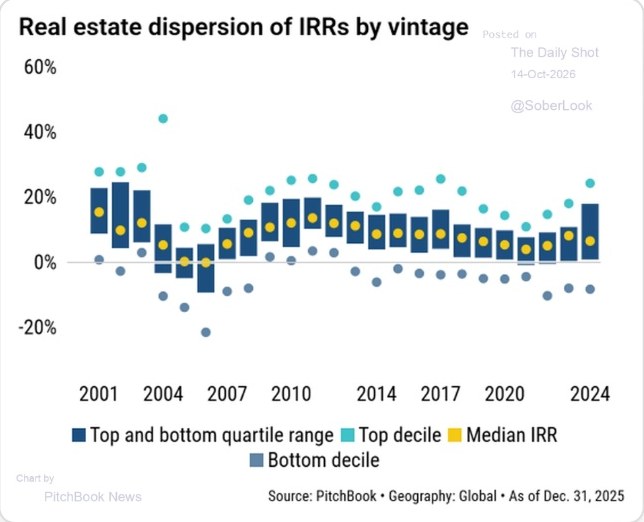
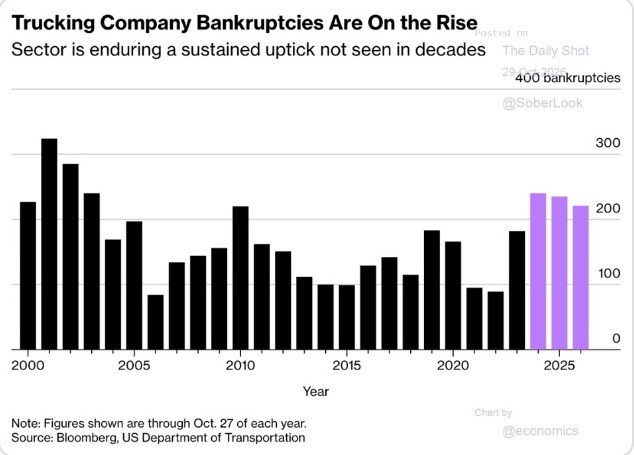
Chart of real estate IRR dispersion by vintage, 2001 to 2024, showing median IRRs trending lower since the post-financial-crisis rebound
Median real estate IRRs have trended lower since the post–financial crisis rebound. Source: PitchBook.
Bar chart of U.S. trucking company bankruptcies, 2000 to 2026, showing a three-year spike
Trucking company bankruptcies remain elevated, extending a three-year spike not seen in decades. Source: Bloomberg, U.S. Department of Transportation.

A new federal rule for importers

One narrow but far-reaching federal rule bears directly on warehousing and distribution. Under a new U.S. Customs and Border Protection rule that takes effect January 5, 2027, foreign importers of record must either be validated members of the Customs Trade Partnership Against Terrorism (CTPAT) program or file their entries through a CTPAT-validated customs broker. If they do neither, their goods will not be released at U.S. ports of entry.

Effective January 5, 2027: foreign importers of record must be CTPAT-validated or use a CTPAT-validated customs broker for every entry.

Because CTPAT validation rests on proven supply-chain security, we expect the pressure to flow down to the 3PLs and warehouses that handle these goods. New, free-standing buildings are far easier to fully secure and control than older ones, and smaller operators will find it harder to qualify.

Hard Tech: a bright spot with real risk

One bright spot in Southern California is aerospace, defense, aircraft, drones and robotics — sometimes called Hard Tech. Los Angeles, particularly the corridor from LAX to Long Beach, along with Orange County and parts of the San Fernando Valley, has long been the nucleus of the nation’s defense industry. During World War II, Korea, Vietnam, the Cold War and the Gulf Wars, Southern California’s defense factories were central to industrial real estate growth. In peacetime, production falls off and factories are sold as part of the “peace dividend.” Defense and aerospace occupiers are cyclical.

Today there is even more volatility. Hard Tech companies are generally not prime contractors with long histories and substantial assets. They are venture-capital financed and do not have established credit profiles, so lease security ranges from large security deposits to letters of credit. If sales do not materialize quickly, many Hard Tech tenants will struggle to complete their leases.
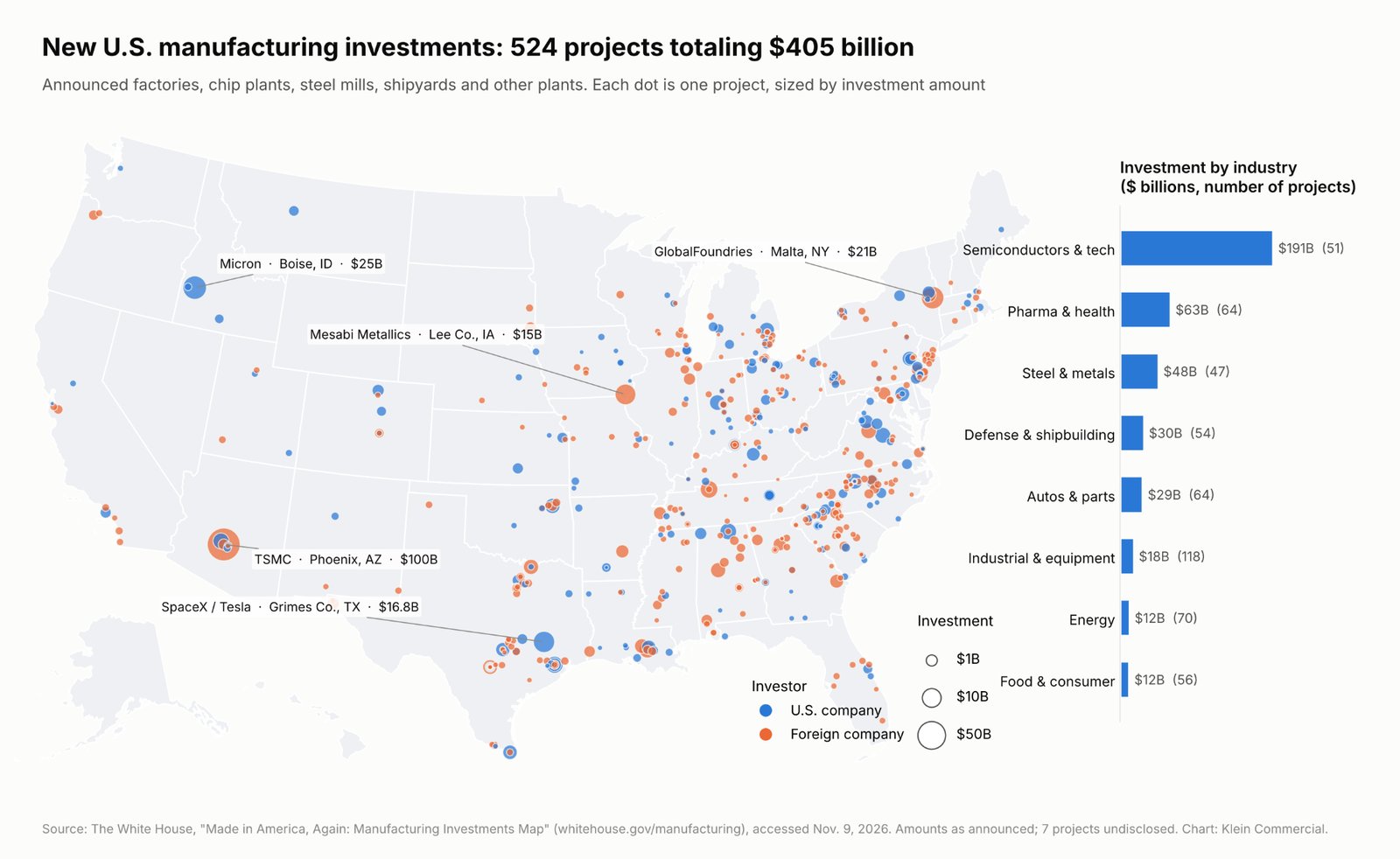
Map of 524 new U.S. manufacturing investment projects totaling $405 billion, sized by investment and colored by U.S. or foreign investor, with investment by industry
524 announced U.S. manufacturing projects totaling $405 billion. Source: The White House, “Made in America, Again: Manufacturing Investments Map,” accessed November 9, 2026. Chart: Klein Commercial.

The national picture: a manufacturing upswing

The manufacturing picture looks even stronger when you zoom out to the entire United States. A clear manufacturing upswing is under way across the country, driven by reshoring and foreign industrial investment, much of it announced under the current administration’s trade and industrial policies. These are substantial investments, and they are shifting the industrial building landscape away from West Coast distribution and toward regional production centers nearly nationwide. Auto, basic materials, AI buildout, energy and defense production are developing throughout Texas, Louisiana, the Southeast, the Midwest and Arizona — with comparatively little in Southern California or the rest of the West.

Southern California, the long-time leader in industrial buildings, is in a cyclical slump. Next time, we’ll report on the opportunities this adjustment period is creating.

Jim Klein, SIOR · Klein Commercial Real Estate, Inc. · 310-451-8121 · jimklein@kleincom.com
Is This The Time To Find Deals

Is This The Time To Find Deals

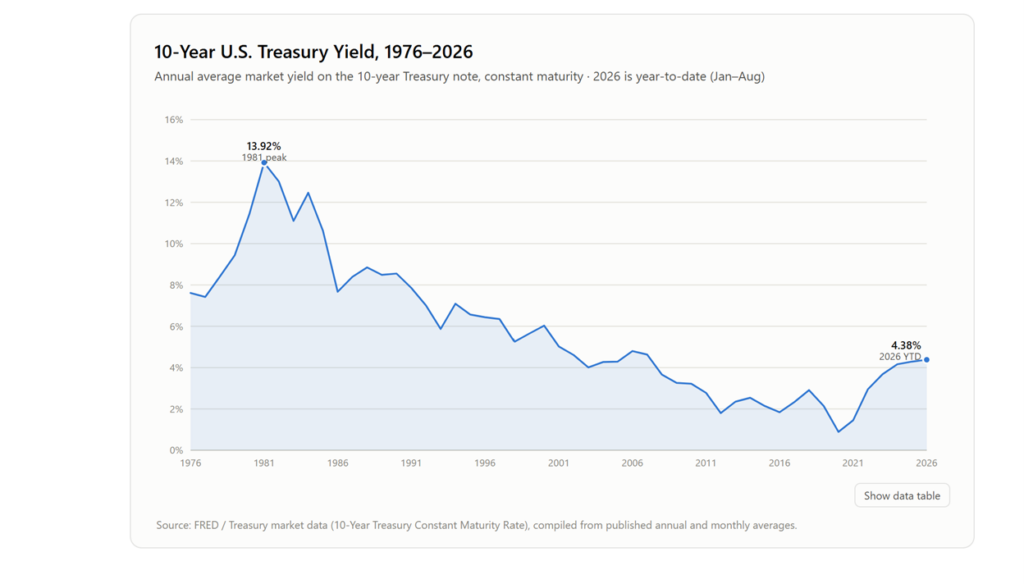
Is This The Time To Find Deals?Let us start with treasury bond rates because of the relevance to real estate investors.  Treasuries plus a spread determine loans and cap rates.  In1981, the year I started in the business, mortgage rates were as high as 18%, and I learned about creative financing. Since that time, rates have been in general decline to where homeowners could borrow under 3%.  Over that extended period, buyers and property owners received a continuous rise in property value partially due to the lower cost of finance. Interest rate declines accelerated during Covid to the lowest point in 40 years. This trend fully supported large investors and developers and took the market away from owner/users. Now with interest rates currently re-setting at higher levels, we are at an imbalance because it’s difficult to get satisfactory returns without significantly lower prices. In addition, timelier capital has shifted to other more promising investments, like the AI buildout.  A new phrase in real estate, Zombies, are properties that were purchased at the top and can no longer be rented profitably. Capital from the limited partners is tied up and expected redemptions are delayed.
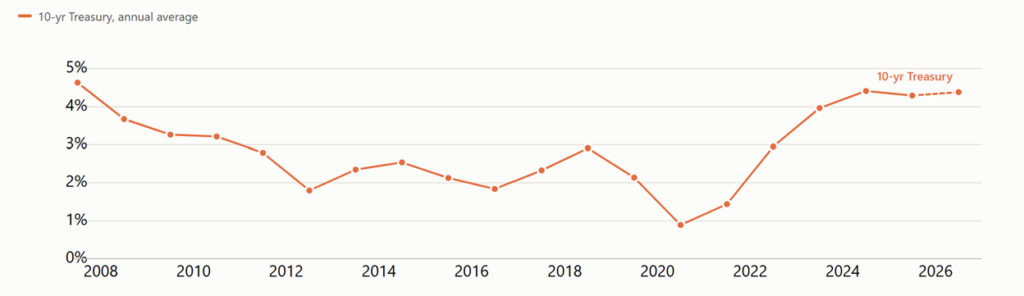
While there is disruption, current interest rates are not abnormal. They are still historically reasonable. The background reasons for higher rates at this point of time could be explained as a reversion to the mean or it could be geopolitical. What is certain is higher rates are not welcome for those who purchased at the peak or are facing a re-finance. It is also true that buyers will be underwriting at today’s interest rates when they deploy new money and that will point to price reductions. Owner/Users, who generally purchase based on comparative occupancy cost and not rate of return, have many more good opportunities than when investors crowded out the market.

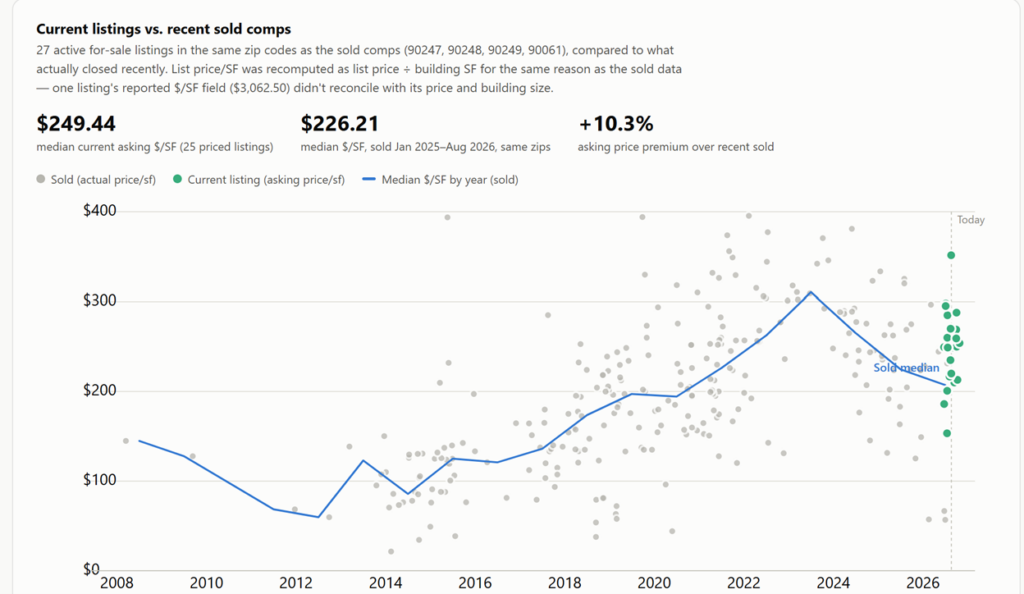
Yes, there are deals today. Sellers feel pricing pressure. Higher cap rates and financing costs, moderating rents, longer vacancy periods, refurbishment, property taxes and insurance premiums all need to be accounted for with any purchase. Currently, there is a standoff between buyers and sellers. Sale prices are declining while asking prices are 10% to 20% higher. Interest rates are key. If they stay steady or go higher, I expect to see softer pricing unless we get a boost in rents, and they are also currently in decline.

Prices Are Down From the Peak

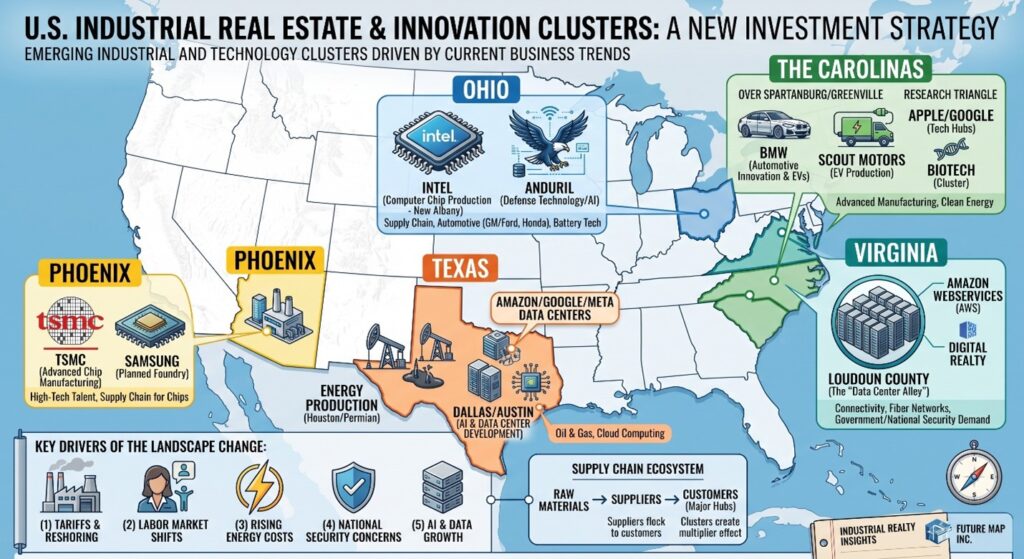
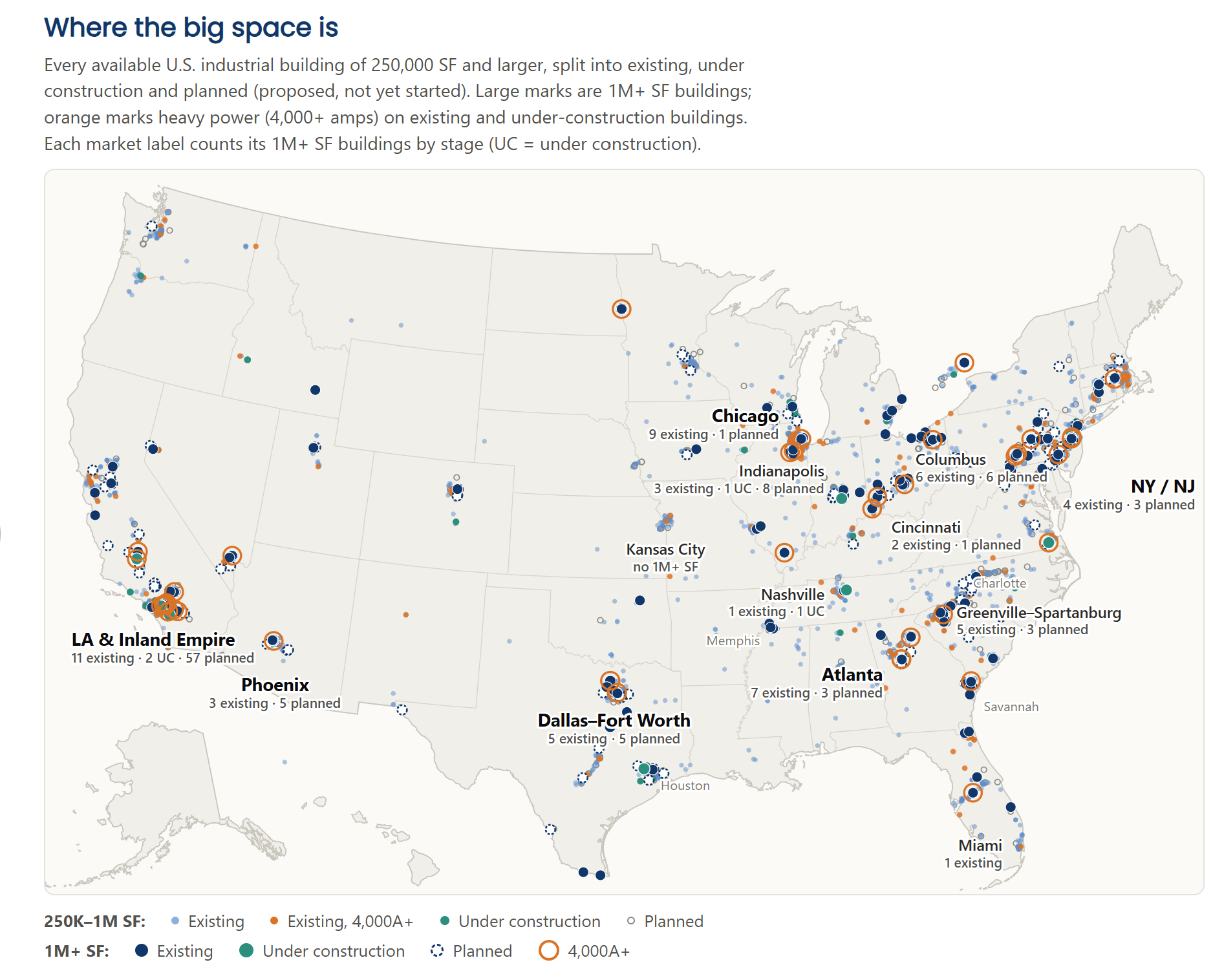
U.S. Industrial Clusters

There has been a re-ordering of industrial geography. Gateway industrial markets like Chicago, New York, Dallas, and especially Los Angeles have been primary targets for large investors of industrial real estate. Gateway cities are where goods flow, businesses locate and house large consumer markets for warehouse and distribution facilities. New factors in the business economy have stimulated investment in other regions of the country. If you follow the public and private money, it is going to AI, aircraft, defense, drones, autonomous, materials, energy, pharma, and the industrial supply chains. Proximity to vendors, customers, and labor creates industrial clusters that become part of an industrial building investment theme. A style of investing is developing around industrial clusters. You can see large clusters in parts of Texas, the Carolinas, Phoenix, Virginia, and Ohio. Investment companies and developers are following the movement of these new industrial clusters.

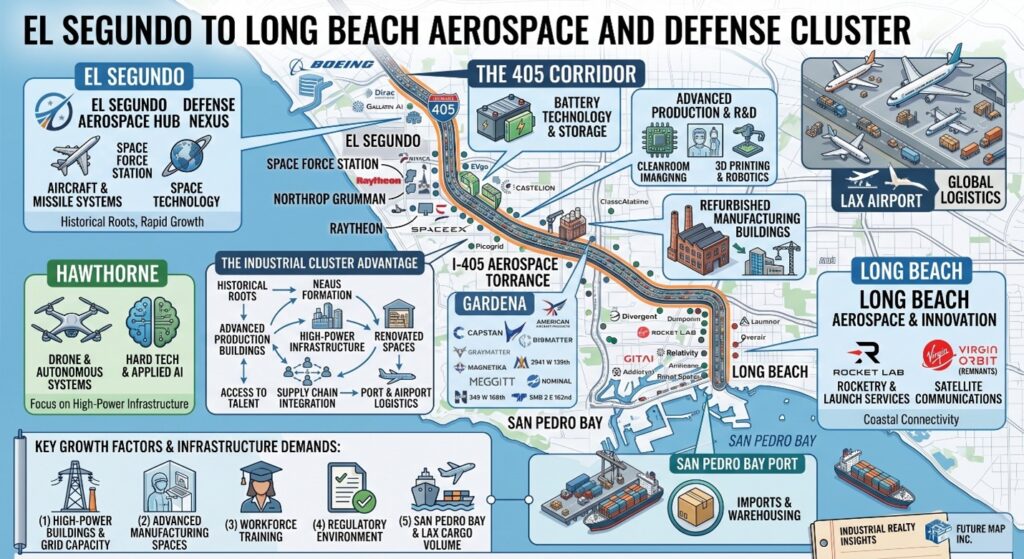
One significant cluster is close to home. Los Angeles the largest Gateway market because of San Pedro Bay. The ports create substantial bulk demand for warehouse and distribution building throughout Los Angeles County and The Inland Empire This can be considered a logistics cluster.  This same geography, the El Segundo to Long Beach corridor, has historically hosted an outsized aerospace, defense, and aircraft defense nexus. To serve growing Hard Tech companies, so-called Advanced Production buildings and refurbished manufacturing buildings, with power, are the current sweet spot. Bulk warehouse has become more commodified, whereas production facilities of the right type and location retain pricing power. Lucky for us we are at the center of both the Gateway and Hard Tech industries.

Gateway investors tend to be very conventional using standard underwriting principles and at least in Los Angeles, conservative proformas that are reflective of a commodity business. Supply and Demand, Marginal Pricing, Competition. Cluster investing is more opportunistic, has momentum because of immediate corporate capital infusions, and improves greatly with local knowledge of expanding companies. Where I am in Gardena, investing performance improves when you have multiple sources of demand, for instance gateway and clusters. Dallas, too, is a Gateway with a Data Center cluster. Savannah/Charleston, a port and significant manufacturing asset (aircraft and auto). New Jersey, a port and Pharma cluster. Purchasing in regions with Gateways and Clusters combined provides more ways to lease a building.

Mr. Warehouse

What are you doing with AI? That is the question I try to answer with my SIOR colleagues. Most have used AI for documentation preparation like offers, proposals, invoices, and lease negotiation. Some have created an underwriting platform for immediate valuations or use AI for research.  Not too many have gone all in with a complete recreation of their business, although that is where AI adoption is headed. AI creates an abundance of intelligence that no human can control except with more AI. Taking that next step of controlling AI and using agents, especially in connection with real estate deals, is where we get bogged down.

With the advice of a pioneer in our group, I put our AI persona under a more recognizably and searchable name and we choose Mr. Warehouse. Mr. Warehouse is an extension of our brokerage practice using the extensive data we generate and manage about gateways and clusters throughout the U.S. and beyond. It would be impossible if we did not have SIOR colleagues on the ground in every location and AI to make relationships. Our philosophy is to let AI lead, and we’ll be its human agent.

One area that we have researched and developed is location data.  Location data creates spatial relationships that are essential to producers, suppliers, distribution networks, and capital to create real estate value. Every property has longitude and latitude that AI can read make spatial relationships. We have found with the right spatial location and a personal relationship, it can be the the right environment to make a deal. Succinctly, Mr. Warehouse is using AI data and feeds, to make personal relationships, and create deals.

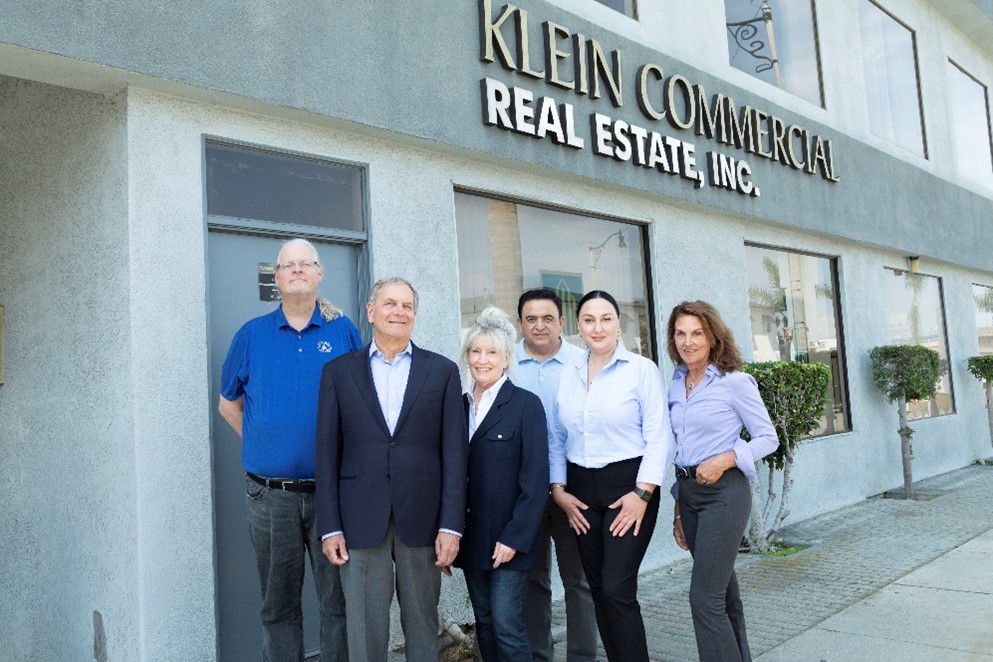
For immediate intelligence, on the ground knowledge is one area where humans still have an advantage. It is the reason our office is located on Gardena Boulevard to be close to our customers. We expanded our office to learn more about properties and clients in our core market, from LAX to the Harbor. We are fortunate to have the twin drivers of gateways and clusters in our market. Please refer to our Team Page and feel free to contact us any of us about industrial property.